Insight details
A request for quotation, or RFQ, is more than a message asking a Chinese supplier for the "best price." A good RFQ gives the supplier enough information to price the same product, quantity, quality level, packaging, and delivery requirements that you actually need.
This matters because two suppliers can quote very different prices for reasons that have little to do with their efficiency. One may assume a different material, packaging level, quantity, delivery term, or production schedule. A structured RFQ reduces those differences before the quotations arrive, making the responses easier to review and compare.
What Is an RFQ?
RFQ stands for Request for Quotation. It is a buyer's request for a supplier to provide pricing and commercial information for a defined product or order requirement.
A useful RFQ normally answers four basic questions:
- What exactly does the buyer want?
- How much does the buyer need?
- What quality, packaging, and compliance requirements apply?
- Where and when does the buyer need the goods?
The goal is not to create a long purchasing document for every inquiry. The goal is to give suppliers the same commercial and technical information so their responses can be compared on a like-for-like basis.
For buyers who are still building a supplier shortlist, our guide on finding and comparing Chinese suppliers covers the supplier-selection stage before the RFQ is sent.
If a detailed RFQ still produces incomplete replies, first confirm that the supplier is willing and able to handle this product, customization, and actual first-order quantity. Highlight the requirements you cannot compromise on, including inspection access if it is essential. State repeat volumes only when realistic; do not promise a larger order to attract a response. This short fit check helps decide whom to brief fully; the complete specification remains the basis for the final quote.
Start with a Clear Product Specification
The product description is the foundation of the RFQ. If the supplier has to guess what the product is, the quotation may be based on the wrong material, dimensions, finish, or production method.
For a standard product, the RFQ may need:
- Product name and model
- Reference photos or product links
- Main dimensions
- Material
- Color or finish
- Required quantity
- Any important functional requirement
For custom or industrial products, include more precise information where relevant:
- Technical drawings
- Material grade
- Tolerance
- Surface treatment
- Manufacturing method
- Performance requirements
- Testing requirements
For example, "stainless steel bracket" may be too broad for a reliable quotation. A supplier may need the steel grade, dimensions, thickness, surface finish, application, and expected quantity before deciding what to quote.
Do not add technical details simply to make the RFQ look more professional. Add the details that can materially change the supplier's cost, production method, or ability to meet the requirement.
From reference photo to a clearer RFQ
Only have a reference photo? Start with the photo and what you already know. Describe what must match, mark unknown details as “to confirm”, and ask the supplier what information is needed next. You do not need to complete every item below before making contact.
Turn a tool-set photo into a configuration brief
Use the photo to show the layout you have in mind, then separate the tools you need from details still to confirm.
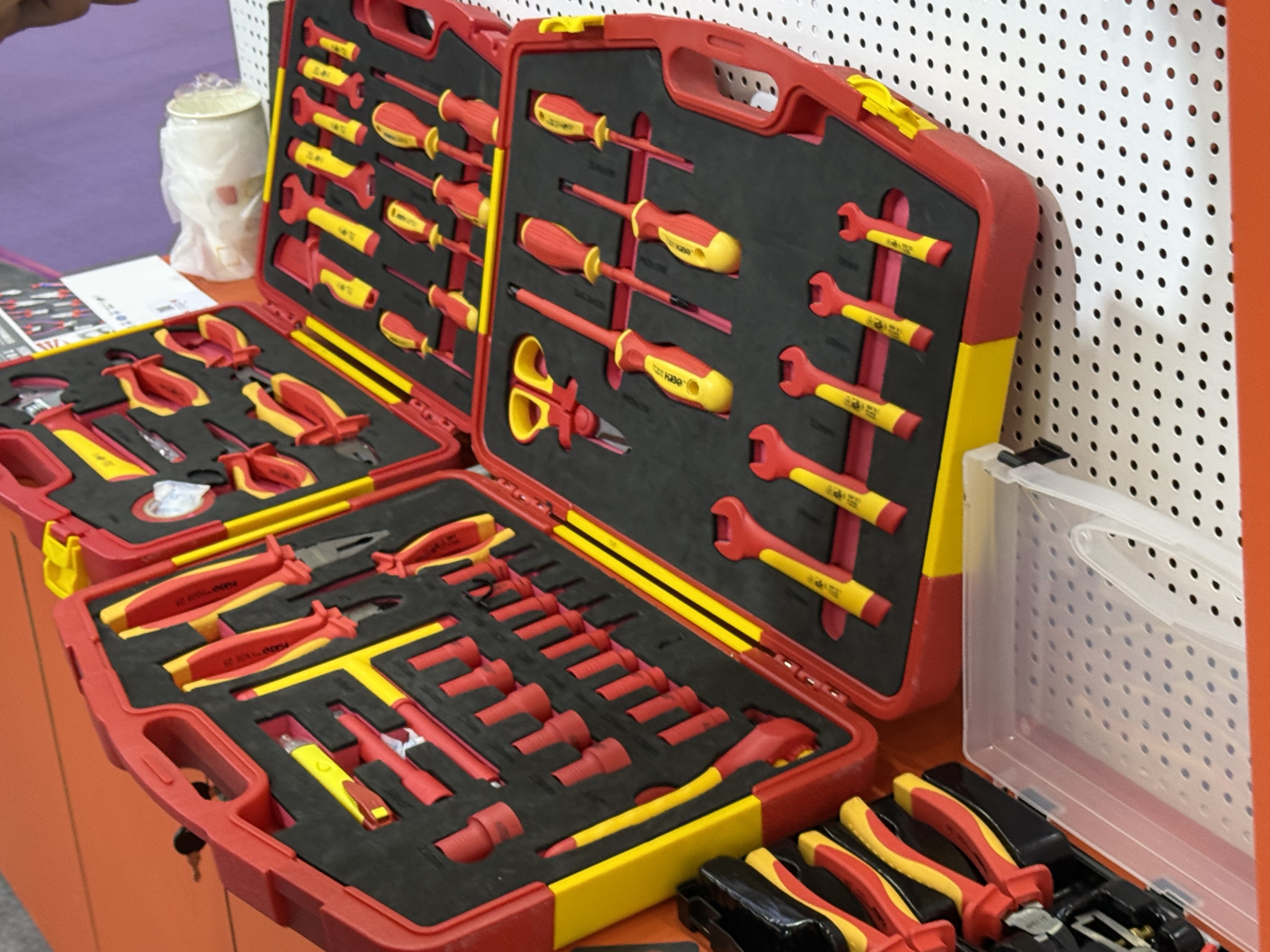
Tool sets photographed on display at the Canton Fair. The photo is a configuration reference; the supplied items and specifications need separate confirmation.
What the photo shows: An open carrying case with different hand tools arranged in fitted spaces.
What it cannot confirm: The exact contents, tool sizes, materials, insulation rating and certification cannot be confirmed from this photo. Handle colors do not establish electrical safety.
What you can share first: Describe the intended work. Share any known tool types and sizes, items to add or remove, and preferences for the case and packaging. Mark undecided items as “to confirm”.
What to ask the supplier: Ask for an itemized configuration list with sizes, a case layout and packaging details. If an insulation or certification requirement applies to your use, ask what evidence is available for the proposed tools.
A message you can adapt
We are looking for a tool set with a layout similar to the reference photo. Intended use: [describe]. Known tools/sizes: [list, or to confirm]. Case/packaging preferences: [describe, or to confirm]. Please propose an itemized configuration and identify any details we need to confirm.
Turn a flange photo into a connection brief
A similar appearance is a starting reference. Explain the connection the flange must fit and distinguish known requirements from open questions.
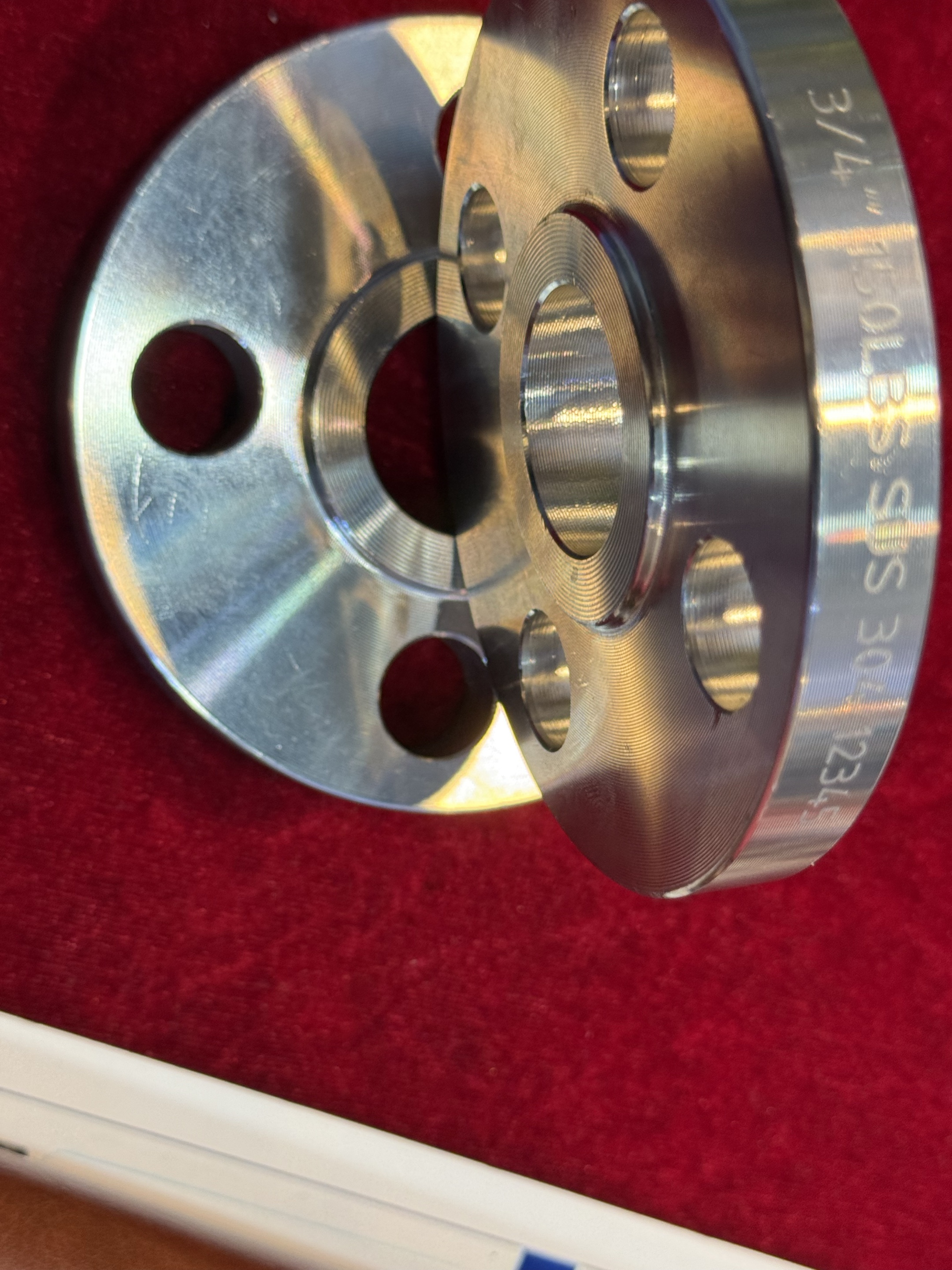
Flanges photographed on display at the Canton Fair. Visible shape and markings are references, not a verified specification for an order.
What the photo shows: Metal flanges with central openings, bolt holes and visible faces.
What it cannot confirm: The required dimensions, material grade, applicable standard and pressure rating cannot be established from this photo. Visible markings need checking against the relevant drawing or product documents.
What you can share first: Describe the application and mating connection. Share an existing drawing or known interface dimensions, plus any standard or material requirement you already have. Leave unknown items open; ask which drawing or measurements are needed next.
What to ask the supplier: Ask the supplier to identify the drawing revision and proposed standard, dimensions, material and pressure rating. Request any deviations in writing, and confirm unresolved connection details before relying on a final quotation.
A message you can adapt
We need a flange for [application / mating connection]. The photo shows the general form we have in mind. Available drawing or interface dimensions: [attach / list / to confirm]. Known standard/material requirements: [list / to confirm]. Please identify the information still needed and propose a specification for confirmation.
Turn fan and duct photos into a use-and-installation brief
Start with where the equipment will be used and how it must fit. Confirm fan and duct requirements separately, then check compatibility if they are to be used together.
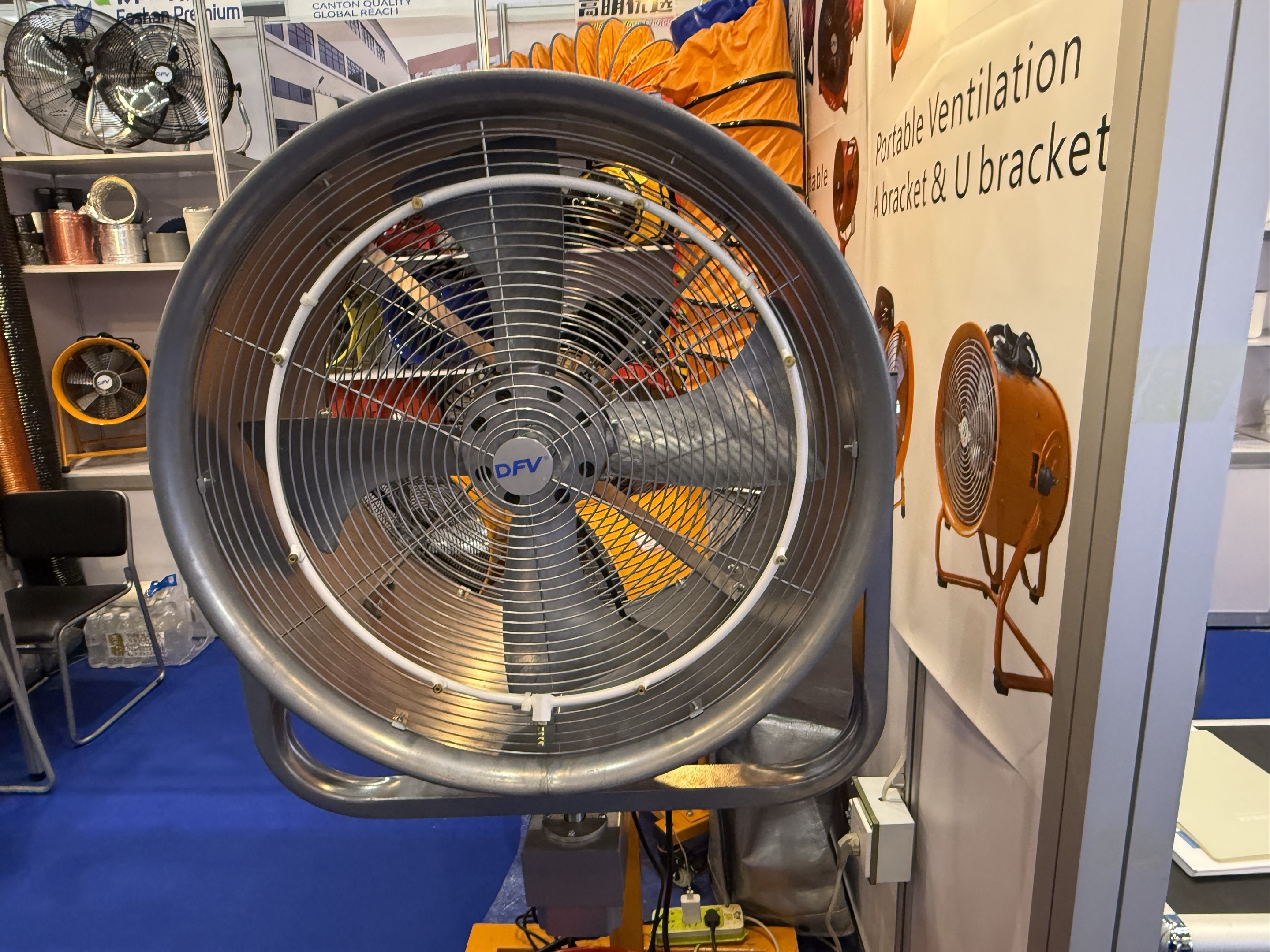
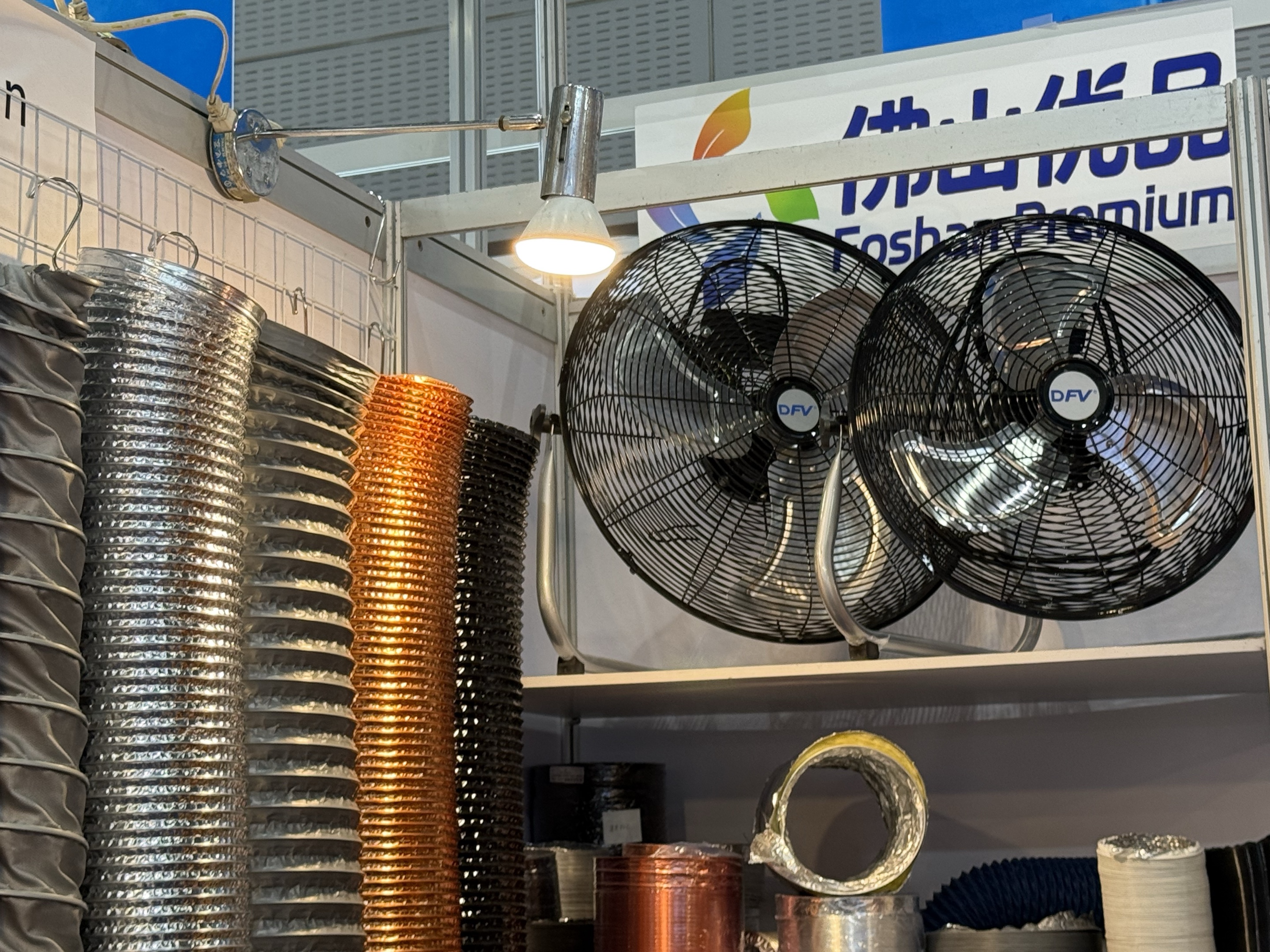
Fan and flexible-duct displays photographed at the Canton Fair, shown here as separate requirement examples. Their specifications and suitability for use together remain to be confirmed.
What the photo shows: A fan with a support frame, and a separate display containing fans and flexible ducts. Displaying them together does not confirm that they form a matched system.
What it cannot confirm: The photos do not establish airflow, pressure, power, noise, electrical supply requirements or fan-to-duct compatibility.
What you can share first: Describe the use and installation environment, available space, connection needs and available electrical supply. Share any known performance targets. For a duct, add known connection dimensions and routing needs; leave unknowns to confirm.
What to ask the supplier: Ask for a proposed model, dimensions, electrical requirements and performance data relevant to your use. If the fan and duct will be used together, ask the supplier to confirm the connection and expected performance of the proposed combination.
A message you can adapt
We need a fan and/or duct for [use / installation environment]. Available space and connections: [describe / to confirm]. Electrical supply: [state / to confirm]. Known performance targets: [list / to confirm]. Please propose suitable equipment and identify the installation or performance details needed before confirming the specification.
State Quantity and Order Pattern
Quantity affects more than the unit price. It can change MOQ, tooling, production planning, packaging, and the supplier's willingness to quote.
At a minimum, tell the supplier:
- Sample quantity if a sample is needed
- Initial order quantity
- Expected repeat-order quantity if known
- Estimated annual volume if relevant
- Quantity range when the final amount is not fixed
You do not need to invent an exact quantity when the project is still being evaluated. A range is usually better than leaving the supplier to guess.
For example:
Initial order: 1,000 units Expected repeat order: 3,000–5,000 units Target annual volume: approximately 10,000 units
This gives the supplier enough context to explain whether pricing changes at different volumes.
Define Quality and Compliance Requirements
A low quotation is only useful if the supplier is quoting the right quality level.
State the requirements that can affect production or acceptance, such as:
- Material or grade
- Product standard
- Inspection requirements
- Required test reports
- Certification requirements
- Destination-market requirements
- Buyer-specific quality standards
For products entering regulated or specification-sensitive markets, include known requirements before the quote is prepared. A supplier may be able to make the product but still be unable to provide the documents or testing the destination market requires.
You do not need to decide every compliance question inside the RFQ. The important point is to tell the supplier what is already known and identify what still needs confirmation.
Explain Packaging and Labeling Requirements
Packaging is often treated as a detail after price is agreed, but it can change the quotation materially.
Include relevant requirements for:
- Individual or inner packaging
- Outer carton
- Protective materials
- Retail packaging
- Pallets
- Labels
- Barcodes
- Shipping marks
- Carton markings
A supplier quoting plain export cartons may produce a lower price than a supplier quoting printed retail packaging, custom inserts, protective foam, or individual labels.
For that reason, describe the packaging you actually need before comparing quotations.
Include Sample Requirements
If a sample is part of the decision process, state the requirement in the RFQ rather than treating it as a separate conversation.
Clarify:
- Sample quantity
- Sample cost
- Sample lead time
- Whether the sample uses the proposed production material
- Whether tooling or customization is involved
- Whether the sample cost is refundable against a bulk order
A sample should also become a clear reference point for later production. Before moving into bulk production, buyers can review what to check before approving a sample.
The RFQ does not need to repeat the full sample-approval procedure. It only needs to make the expected sample process clear enough that suppliers quote it consistently.
State the Destination and Delivery Requirement
A supplier cannot provide a meaningful delivery quotation without knowing where the goods are going and what delivery arrangement is expected.
Include:
- Destination country
- Destination city, port, or warehouse where relevant
- Required delivery date or target shipping date
- Preferred shipping method if already known
- Preferred Incoterm
For example, EXW and FOB are not equivalent quotation requests, and a delivered price can include responsibilities that an EXW price does not.
For a detailed explanation of how FOB, EXW, CIF, and DAP affect a China supplier quote, compare FOB, EXW, CIF, and DAP before deciding which quotation basis to request.
The important RFQ principle is simple: ask suppliers to quote on the same basis wherever possible.
Ask Suppliers to Break Out the Quote
Do not ask only for a single unit price.
A useful RFQ can ask suppliers to provide:
- Unit price
- MOQ
- Sample cost
- Tooling or mold cost
- Packaging cost if separate
- Lead time
- Payment terms
- Price validity period
- Delivery term
- Local delivery cost where applicable
- Any other required or optional charges
You can also ask the supplier to identify what is included and excluded from the quoted price.
This is especially important when suppliers use different assumptions. One supplier may include packaging while another treats it as an option. One may quote a delivered arrangement while another quotes from the factory.
Once the responses arrive, use a structured process to compare Chinese supplier quotations beyond price rather than comparing the unit-price column alone.
Ask the Same Questions to Every Supplier
If the goal is to compare suppliers, use the same RFQ for every shortlisted supplier.
A simple template might include:
| Item | Buyer requirement |
|---|---|
| Product | Product name, model, and reference |
| Material | Required material or grade |
| Specification | Dimensions, drawing, tolerance, or performance |
| Quantity | Initial order and expected repeat volume |
| Packaging | Required packaging and labeling |
| Destination | Country and delivery point |
| Incoterm | Preferred quotation basis |
| Sample | Required quantity and timing |
| Lead time | Target production or delivery schedule |
| Quality | Inspection, test, or certification requirements |
| Payment | Preferred or requested payment terms |
| Documents | Required commercial or compliance documents |
Use the table as a working brief: mark an unsettled field UNKNOWN and ask what is needed to finalize it. Ask suppliers to mark each requirement as meets, deviation, pending confirmation, or proposed alternative, referring to the current attachment version. Silence is not confirmation. Send a short follow-up listing the unanswered or conflicting items, request a reply date, and keep them open until answered. If an essential requirement remains unresolved after clarification, keep that supplier out of the final comparison rather than guessing compliance.
This does not mean every supplier must use identical wording. It means the commercial assumptions behind the quotes should be consistent.
What to Attach to an RFQ
Attachments help reduce ambiguity when text alone is not enough.
Depending on the product, attach:
- Product photos
- Technical drawings
- Product specifications
- Reference samples or sample photos
- Packaging references
- Label artwork
- Existing quality standards
- Test or certification requirements
- Relevant product links
Keep the attachments organized. A supplier should be able to identify which file is the current specification and which files are only reference material.
If a supplier asks for a drawing despite written specifications, ask which detail it needs to assess: dimensions, layout, artwork, or another production requirement. Agree what file is needed and which version governs the quote; do not assume the request proves the supplier ignored your brief.
If one requirement is still open, say so clearly. For example:
Packaging is not finalized. Please quote standard export packaging separately and identify the cost difference for custom retail packaging.
That is more useful than leaving the supplier to choose an assumption silently.
Common RFQ Mistakes
The most common RFQ problems are usually simple omissions.
Asking only for the "best price"
Without a defined specification and commercial basis, the supplier may return a low price that does not match the actual requirement.
Not stating quantity
Quantity can change MOQ, unit price, tooling, packaging, and production planning.
Leaving material or quality open
A supplier may select a lower-cost material or process unless the requirement is clear.
Ignoring packaging
Packaging can affect both product cost and shipping cost.
Leaving the destination unclear
A factory price and a delivered price answer different questions.
Sending different requirements to different suppliers
This makes later comparison unreliable because the suppliers were not actually quoting the same project.
Mixing sample and bulk requirements
A sample may use special handling or a different production process. State what the sample is supposed to represent.
Comparing different Incoterms as though they were the same
The price can look lower simply because more responsibility remains with the buyer.
Asking for price before defining the product
A fast quotation is not useful if the supplier had to guess the specification.
Accepting "all included" without asking what that means
Ask suppliers to explain the major costs, responsibilities, and exclusions behind the quote.
How to Turn RFQ Responses into a Supplier Comparison
After the RFQs come back, do not immediately choose the lowest number.
Use this sequence:
- Check whether each supplier quoted the same product specification.
- Confirm quantity and MOQ assumptions.
- Check material, packaging, and quality requirements.
- Normalize delivery terms and destination assumptions.
- Identify missing information or exclusions.
- Ask clarification questions before ranking suppliers.
- Compare commercial terms on the same basis.
- Move the strongest suppliers to the sample or verification stage.
The purpose of the RFQ is therefore not only to get prices. It is to make the next decision easier.
When China-Side Support Helps
A well-prepared RFQ can reduce confusion, but supplier replies may still be incomplete, inconsistent, or difficult to interpret.
China-side support can be useful when buyers need help:
- Clarifying supplier replies in Chinese
- Confirming what a quotation includes
- Asking suppliers for missing technical or commercial details
- Comparing responses from several suppliers
- Coordinating sample requests after the quotation stage
- Following supplier communication during the next project step
For buyers who already have supplier options but need practical communication and quotation follow-up in China, trade execution support can help keep those questions moving.
FAQ
What information should I include in an RFQ to a Chinese supplier?
At minimum, include the product specification, quantity, quality requirements, packaging, destination, delivery requirement, and the quotation items you want the supplier to separate.
Should I send the same RFQ to every supplier?
Yes. Use the same core requirements for every shortlisted supplier so the quotations can be compared on a like-for-like basis.
What if I do not know the exact quantity yet?
Give a realistic range or explain the expected order pattern. A range is more useful than leaving the supplier to guess.
Should I include packaging requirements in the RFQ?
Yes, whenever packaging can affect product cost, shipping cost, labeling, or order acceptance.
Should I ask for FOB, EXW, CIF, or DAP?
Ask suppliers to quote on the basis that fits your buying process, and make sure every supplier uses the same basis when you plan to compare their prices.
Can I send an RFQ with only product photos?
You can start with photos, especially for standard products, but clearer specifications usually produce more useful and comparable quotations.
Final Takeaway
A good RFQ makes a supplier's job easier and a buyer's decision clearer.
Define the product, quantity, quality, packaging, destination, delivery terms, and quotation format before asking suppliers to price the order. Use the same RFQ for shortlisted suppliers, ask them to identify what is included and excluded, and resolve missing information before comparing offers.
The goal is not to get the lowest number as quickly as possible. The goal is to get quotations that describe the same buying requirement well enough to support a sound supplier decision.